

Free written scope consultation - allowances, timeline, and change-order rules on paper before a single trade is scheduled
Cambria Kitchen Remodeling: The Fort Worth Owner’s Guide
Cambria kitchen remodeling in Fort Worth typically runs $14,000 – $45,000 installed, depending on countertop square footage, cabinet scope, and whether the sink or backsplash is being replaced at the same time. We stock and install Cambria quartz directly and can usually start the job within two to three weeks of the written estimate. Most Fort Worth homeowners reach out when a seam has separated, an edge has chipped near the sink, or they want to match an existing Cambria design while changing the island shape.
Cambria is a specific product: quartz surface. Not granite, not marble, not laminate. When a Cambria countertop fails, it tends to fail in a few predictable ways, and the fix usually involves knowing which of the 200-plus Cambria designs you own, the thickness of the slab, and whether the original fabricator left proper support underneath. Graham Stein will tell you the most common call he gets is not a broken slab. It’s a homeowner who thought they were buying “just quartz” and now needs to match an edge profile or a seam color that no longer lines up after the cabinets settled.
Key Takeaways
- Cambria kitchen remodels in Fort Worth range from $14,000 to $45,000 installed, with countertops alone at $2,000 – $6,500.
- Cambria is a quartz product with specific thicknesses (1 cm, 2 cm, 3 cm) and edge profiles that must match for any repair or replacement.
- We give a written price before any work starts, and the final invoice matches that price or we explain the difference before you sign.
- Elmstead Remodeling Fort Worth is an independent contractor, not affiliated with Cambria, but we install and repair Cambria surfaces every month across Tarrant County.
Which Cambria Models This Applies To
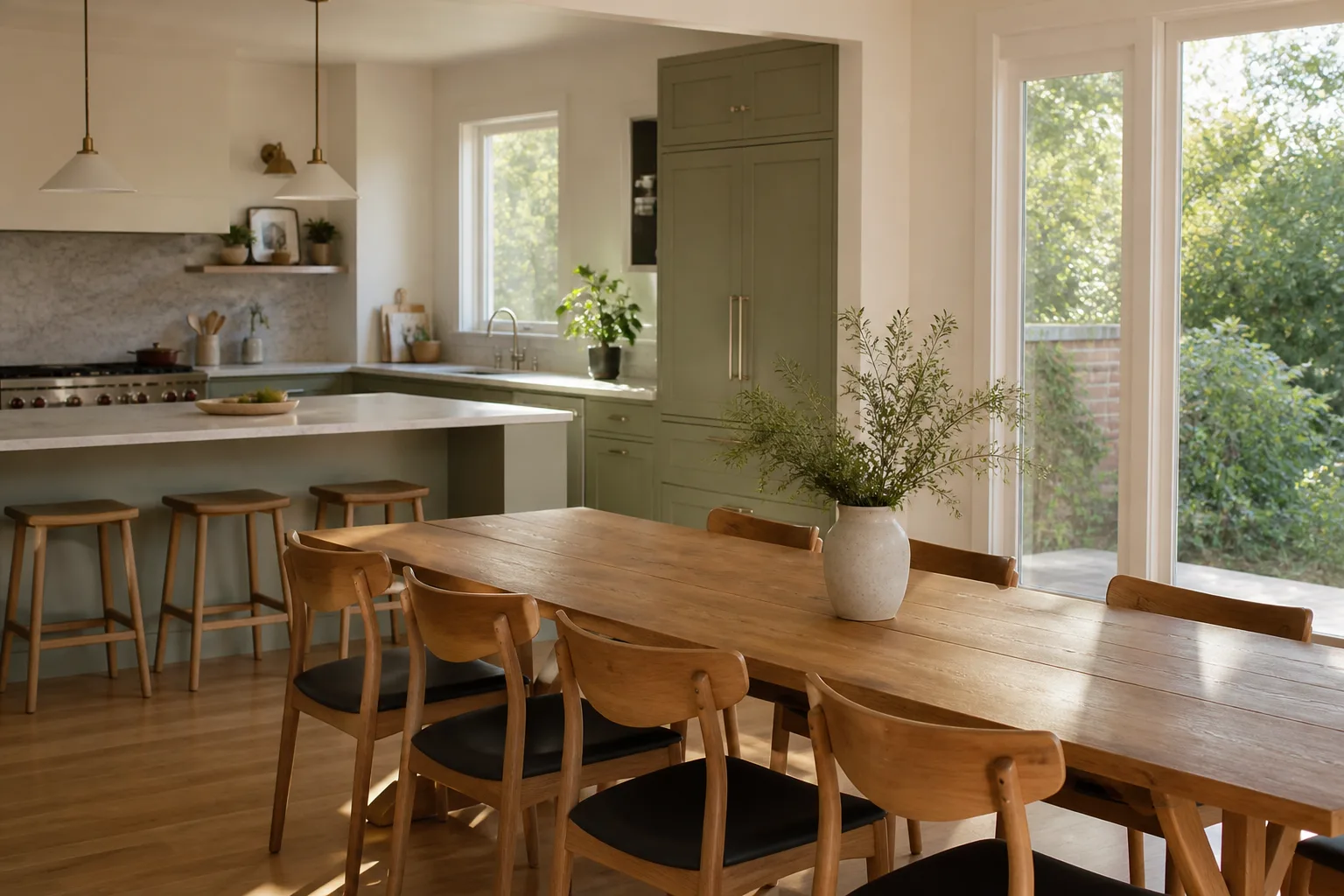
Cambria produces over 200 designs across several collections: the Classic Series, the Marble Collection, the Coastal Collection, and newer designer lines with names like Brittanicca, Torquay, and Ella. The good news is that the installation standards, seam techniques, and support requirements are consistent across all of them. The part that matters most is the slab itself: Cambria is manufactured in 1 cm, 2 cm, and 3 cm thicknesses, and most Fort Worth kitchens use 3 cm for the perimeter counters and island. If you bought a home with Cambria already installed, the thickness determines what we can do with the edge profile and whether an overhang needs additional support brackets.
Identifying your design is straightforward. Look under the sink cutout or on the bottom of the slab for the Cambria sticker, or check the paperwork from the original installation. If that’s gone, take a photo in natural light and we can usually match it against Cambria’s current catalog. One compatibility gotcha we see often: homeowners assume any white quartz with gray veining is the same design. It’s not. Cambria’s Torquay, Brittanicca, and Skara Brae read differently in person, and a mismatched slab on a kitchen island will show at the seam every single day. When we need to match an existing Cambria surface, we order from the current production line and request a specific batch sample before cutting, because veining patterns shift between production runs. This is a detail that matters in Fort Worth kitchens with big islands and waterfall edges, where the seam placement is the first thing you notice when you walk in.
Styles & brands we work with







Signs Your Cambria Kitchen Remodeling Is Failing
- Seam separation at the island or sink run. This usually means the cabinet or subfloor moved slightly after installation, or the seam was cut too tight. North Texas clay soil expands and contracts with moisture, and homes in older Fort Worth neighborhoods like Fairmount settle over decades. A gap wider than the thickness of a dime means the seam needs re-cutting and re-filling, not just caulking over.
- Chipping along the sink edge or counter front. Cambria is hard, but a dropped cast-iron pan can take a clean chip out of the front edge. If the chip is near the undermount sink cutout, water can work into the fissure and darken the stone over time. This is a repair plus a re-polish, not a full slab replacement in most cases.
- Cracking near the cooktop or a corner cutout. Quartz doesn’t flex. If the cooktop cutout was made too narrow on one side, heat expansion from the range can build enough pressure to crack the slab. We’ve seen this on older installs in the Cultural District, where the original cutout didn’t allow for the manufacturer’s recommended 1/8-inch thermal expansion gap.
- De-lamination or dull spots that won’t polish back. Cambria’s surface is non-porous, so dulling is usually from the wrong cleaner breaking down the gloss seal, not from wear. Abrasive powders and bleach-based sprays are the usual culprits. If a section looks hazy next to a high-gloss area, the top layer has been compromised and needs professional resurfacing.
- Island overhang bouncing or flexing when someone leans on it. A 12-inch Cambria overhang without proper steel brackets will eventually flex and crack at the support point. We add hidden steel or corbel support whenever the overhang exceeds the manufacturer’s unsupported span. If your island moves when a kid hops up on a stool, that’s a support failure waiting to happen.
See the difference
 Before
 After
After Before
 After
After Before
 After
AfterReplacement Cost & What’s Included
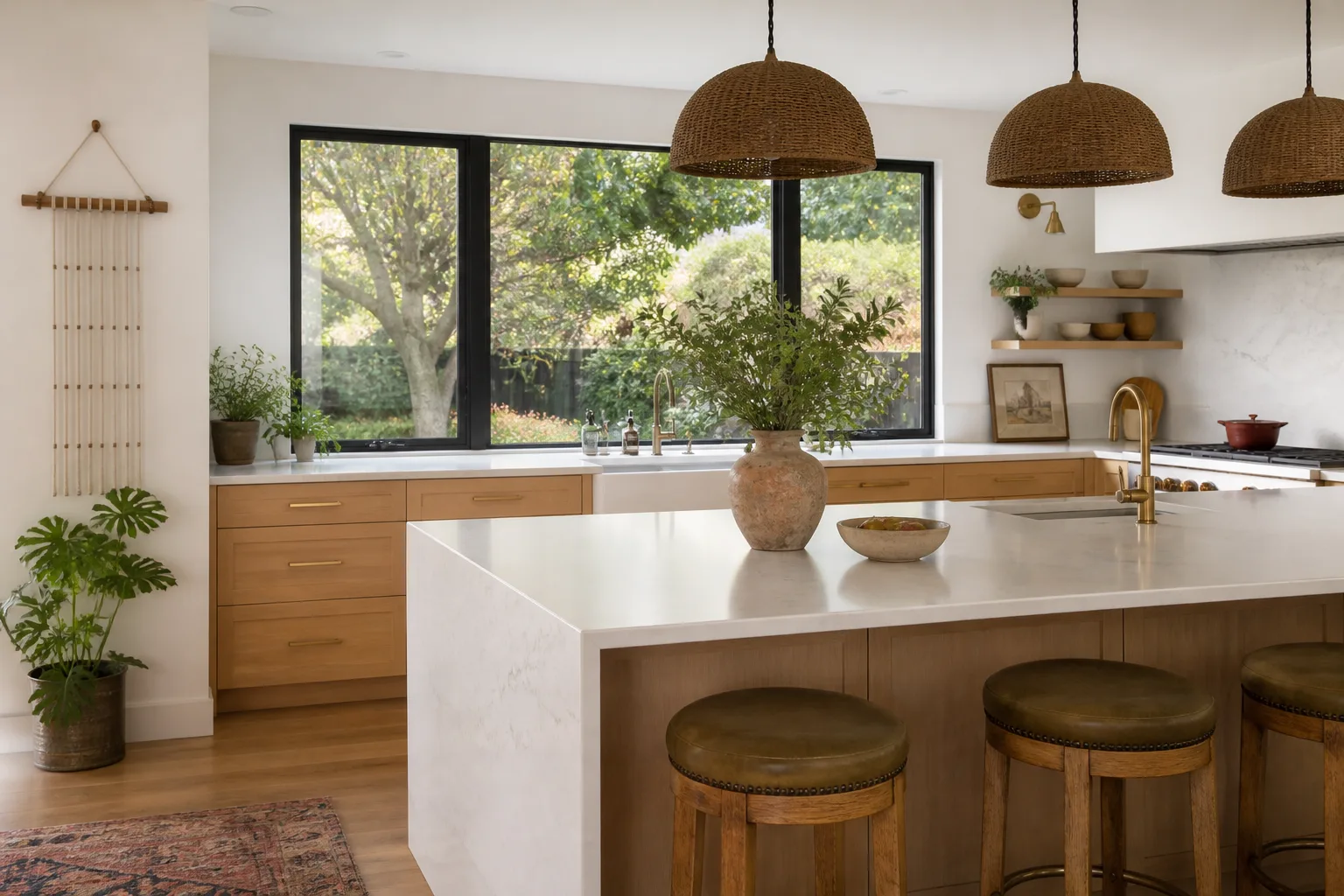
In Fort Worth, a full Cambria kitchen remodel runs $14,000 – $45,000. Countertop replacement alone falls between $2,000 and $6,500, depending on slab thickness, edge profile, and seam count. Cabinet installation adds $4,000 – $13,000, and a kitchen island runs $3,000 – $10,000 when it includes new Cambria surface, base cabinets, and electrical where needed.
| Scope | Typical Fort Worth Range |
|---|---|
| Kitchen remodel (full) | $14,000 – $45,000 |
| Small kitchen remodel | $9,000 – $20,000 |
| Countertop installation (Cambria) | $2,000 – $6,500 |
| Kitchen island installation | $3,000 – $10,000 |
| Backsplash installation | $800 – $2,500 |
| Cabinet installation | $4,000 – $13,000 |
Every estimate includes the slab material, fabrication, template measuring, delivery, installation, seam adhesive, sink cutout, faucet holes, and haul-away of the old surface. We also include the drop cloths, the shoe covers, and the clean-up photo before we leave. The written price we hand you before the job starts is the price on the final invoice. Graham Stein’s rule on this is simple: “The written price and the final invoice should read the same, and if they don’t, that’s on us to explain before we hand you a pen.” The completed work is covered by the 365-Day Done Right Promise: if something isn’t right after the job is finished, we come back and make it right.
DIY or Call Us?
Cambria quartz is heavy. A 3 cm slab of typical kitchen-counter dimensions weighs between 180 and 220 pounds per 8-foot section. That’s not a two-person lift. Attempting to remove or reposition a slab without the right suction clamps and cart can result in a cracked counter, a dropped slab through the drywall, or a serious back injury. Even small repairs, like re-cutting a separated seam, require diamond tooling and a steady hand that knows how much pressure is too much.
What an owner can safely do: photograph the affected area with a tape measure beside it, check under the sink for the Cambria label, and note whether the overhang flexes under light hand pressure. That information helps us give you a more accurate phone estimate. Beyond that, this is a job for a crew that does it every week. Elmstead Remodeling Fort Worth installs Cambria, Silestone, and Caesarstone surfaces across Tarrant County, and our technicians are background-checked and uniformed. Call (682) 708-9180 and a live person will answer, day or night.
FAQs
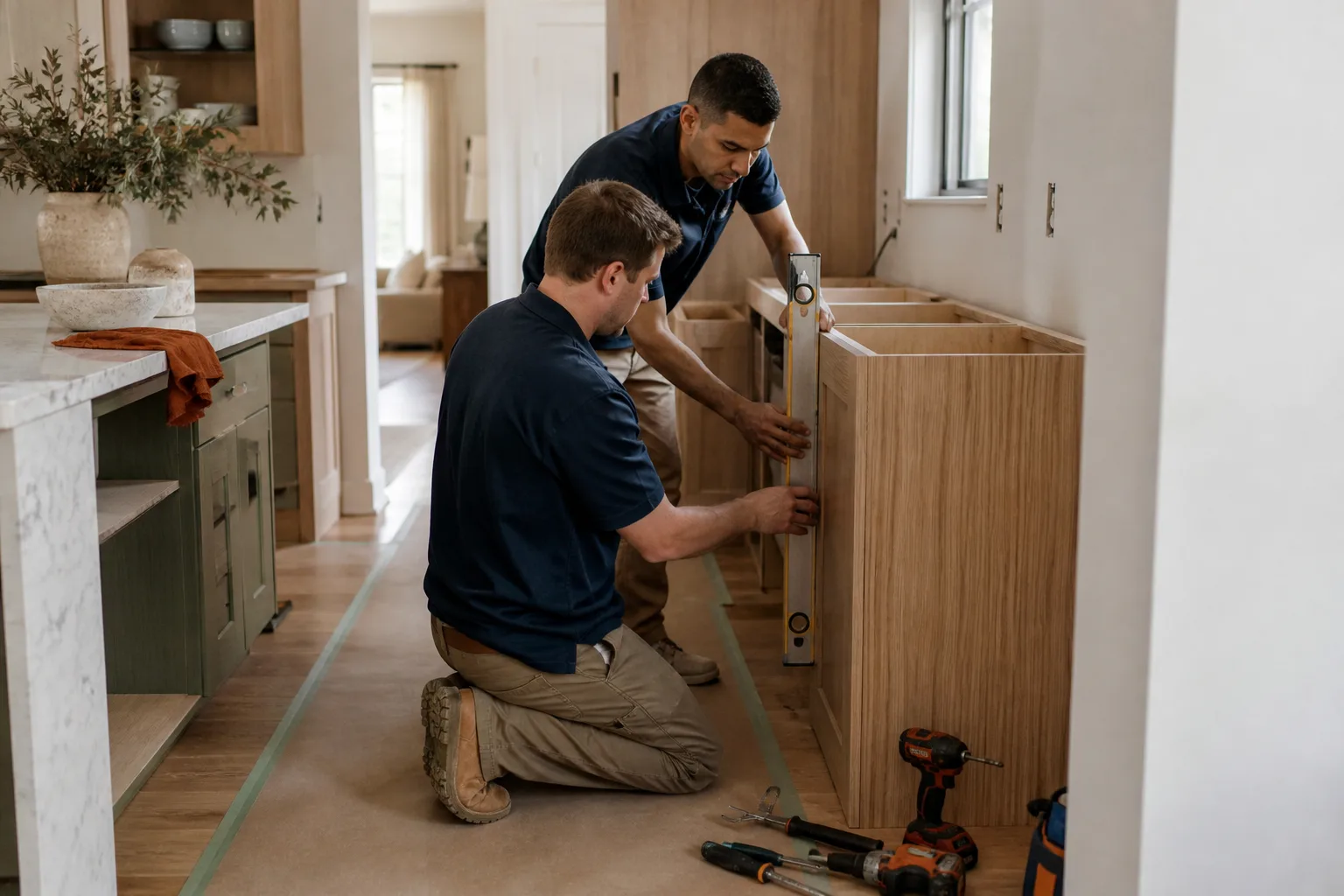
Cambria quartz typically lasts 20 to 25 years or more in normal use, and unlike natural stone it never needs sealing. The bigger variable in Fort Worth is the support structure underneath: homes on expansive clay soil settle over time, and an undersupported slab will crack long before the quartz itself wears out. We check cabinet leveling and add support brackets as part of every installation in the area. Call (682) 708-9180 to have us look at your specific kitchen.
Yes, in many cases a chip, seam separation, or dull spot can be repaired with color-matched resin and professional polishing, usually costing less than a full slab replacement. If the crack runs through a structurally loaded area like a cooktop cutout corner, replacement of that section is the honest recommendation. We’ll always give you the repair option first when it will hold up. Call (682) 708-9180 for a free estimate on the repair.
A countertop-only replacement typically takes 2 to 3 weeks from template measurement to installed slab, with the actual installation day lasting 4 to 6 hours. A full kitchen remodel with cabinets, island, and backsplash runs 4 to 8 weeks depending on scope. We schedule noisy demolition outside school-pickup hours when your family is still living in the house, and we’ll tell you the timeline in writing before we start.
We order each Cambria design from the current production line and request a specific batch sample before cutting, because veining patterns shift between production runs. We keep a limited selection of the most common Fort Worth designs in our shop for quick turnaround on repairs. If you need an exact match to an existing slab, we’ll pull records from your original install if we did it, or match from photos and a physical sample if we didn’t.
When you’re ready to talk about your Cambria kitchen, call our Fort Worth office at (682) 708-9180. A live person answers, we’ll listen to what’s happening, and we’ll schedule a time to look at the space and hand you a written price before any work begins.
Written by Graham Stein, Owner, Elmstead Remodeling Fort Worth at Elmstead Remodeling Fort Worth, serving Fort Worth and nearby areas.


