

Free written scope consultation - allowances, timeline, and change-order rules on paper before a single trade is scheduled
Plant Prefab Kitchen Remodeling: The Fort Worth Owner’s Guide
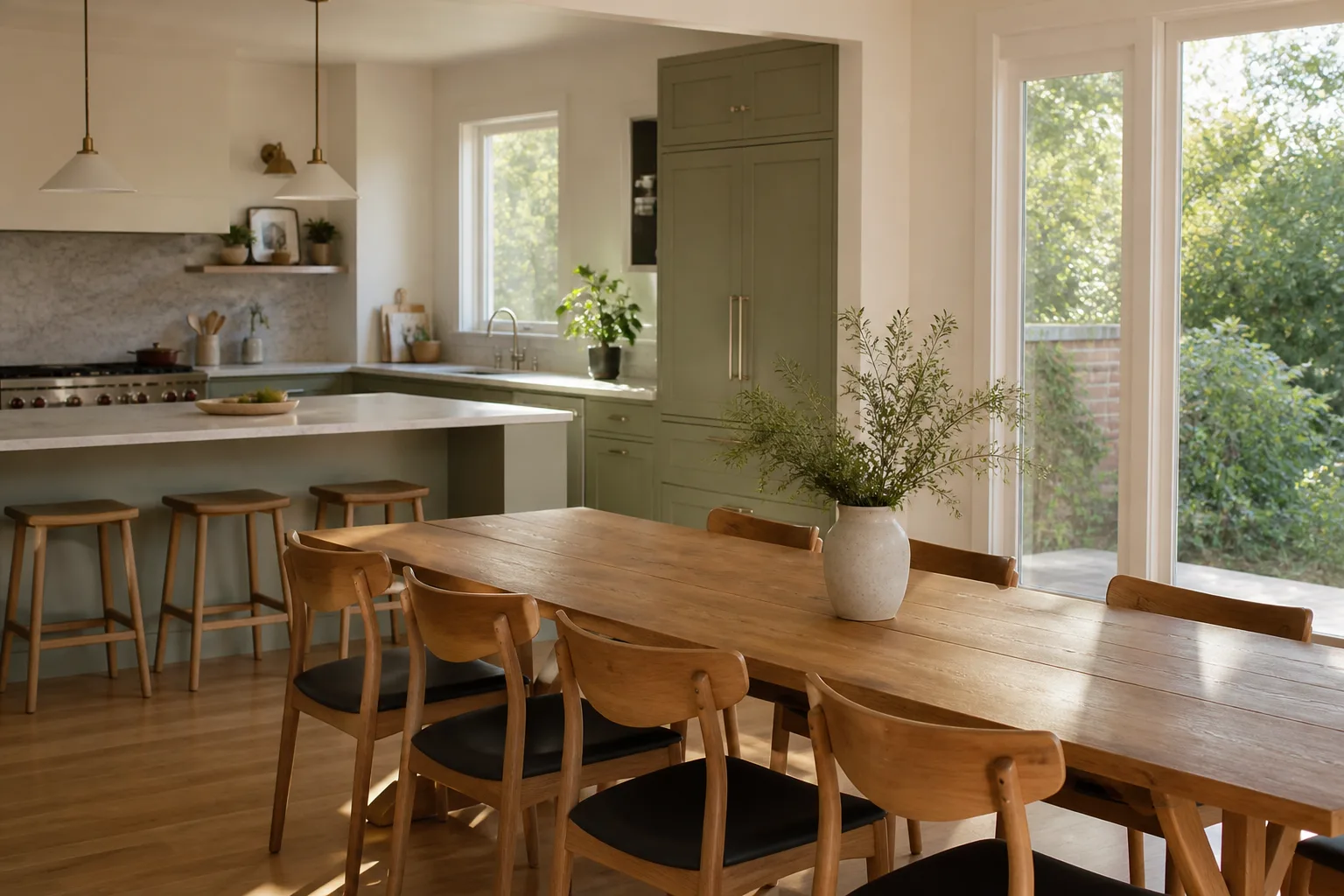
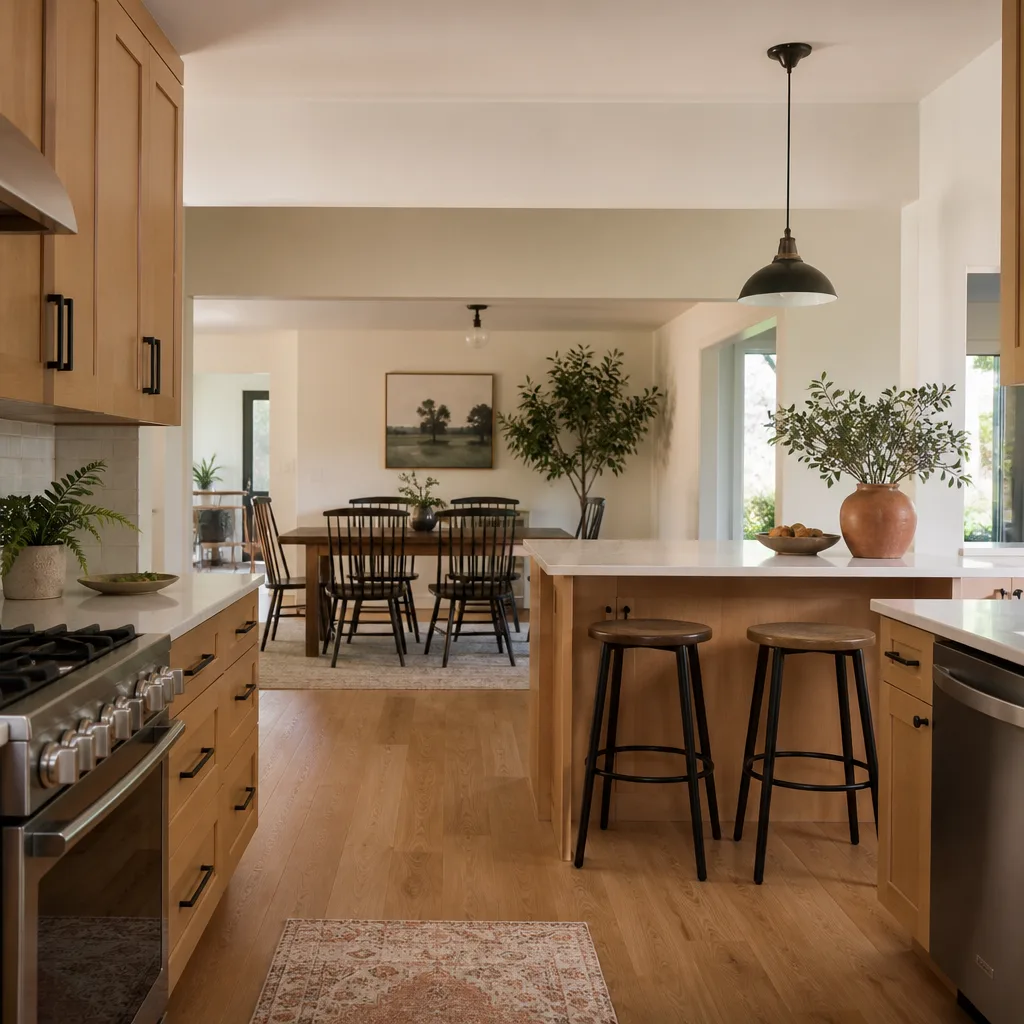
When a Plant Prefab kitchen component fails or reaches the end of its service life in a Fort Worth home, the repair path isn’t the same as a conventional site-built remodel. We stock and install Plant Prefab-compatible kitchen components and complete kitchen remodels, with typical full-kitchen remodels in Fort Worth running $14,000 – $45,000 depending on the module’s original spec and the scope of replacement. Most owners discover the problem through a cabinet face pulling free, a sink base swelling from a slow plumbing leak, or quartz countertop delamination at the seams.
Plant Prefab builds in a controlled factory, which is exactly what makes the parts predictable to replace, once you know which series line the module came from. The factory uses standardized dimensions and documented attachment points, but that standardization cuts both ways: a cabinet box spec’d for one series will not always interchange with another, and guessing wrong turns a straightforward swap into a re-engineering job. We measure, identify the series from the module label if it’s still readable, and match before we order or cut anything.
Which Plant Prefab Models This Applies To
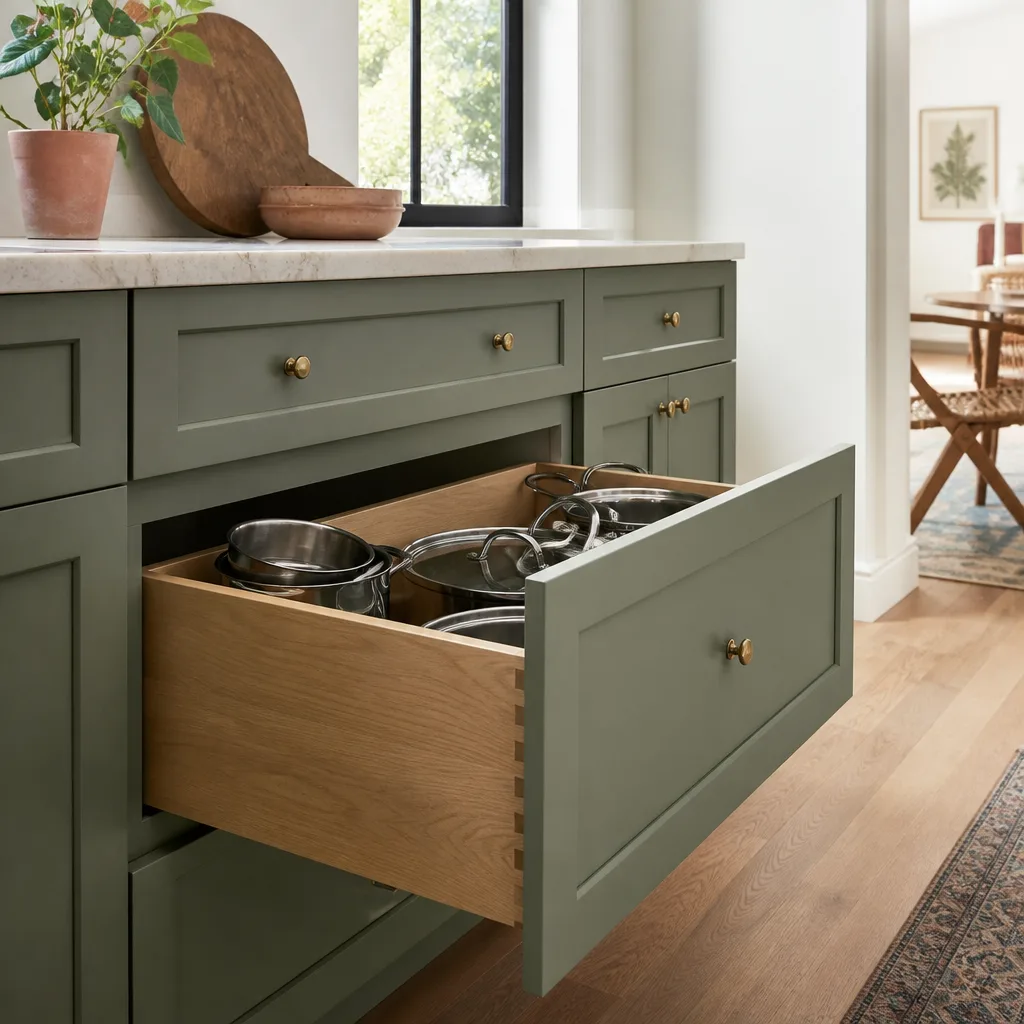
Plant Prefab’s kitchen module components vary by year and series, and the compatibility gotcha most Fort Worth owners run into is the cabinet-to-wall cleat spacing. Earlier Plant Prefab series lines used French cleats at factory-set intervals, while later lines moved to direct stud attachment through the module’s internal blocking. If we’re replacing one cabinet run, we need to know whether the original was hung on cleats or fastened direct, because the replacement box has to match the existing attachment method or the whole run gets reframed.
For OEM versus aftermarket, our honest read in Fort Worth is this: Plant Prefab used several domestic cabinet suppliers over the years, and many of the boxes we source are the same factory lines used by KraftMaid and Wellborn, so an aftermarket match is often indistinguishable from the original once installed. For countertops, we carry and template lines from Cambria, Silestone, and Caesarstone, which means a failed Plant Prefab countertop can usually be replaced with a comparable or better quartz surface without waiting for a factory-only part. The key is pulling the module’s label, measuring the face-frame dimensions, and checking the original hinge cup pattern before ordering anything.
Styles & brands we work with







Signs Your Plant Prefab Kitchen Remodeling Is Failing
- Cabinet door delamination at the bottom edge. Factory cabinets in Fort Worth’s humidity swings absorb moisture at the raw bottom edge first; this shows as peeling laminate or swollen particleboard and means the box is past a refacing fix.
- Sink base floor swelling or softness. The most common failure point in any Plant Prefab kitchen. A slow drain leak or supply-line drip sits inside the cabinet before you see water on the floor, and by then the base panel has compromised.
- Countertop seam separation at the miter. Quartz runs that were seamed with a hard seam at the factory can gap over time in Fort Worth because the slab expands and contracts with interior temperature swings, especially along south-facing walls.
- Drawer glides binding or popping out. Undermount glides on a heavily used drawer bank wear first at the clip, but the actual failure is usually a flexed cabinet side panel that let the glide out of alignment.
- Backsplash grout or caulk failing behind the sink. Plant Prefab modules ship with a set backsplash, and when the seam behind the faucet fails, water moves behind the cabinet and into the drywall. The backsplash is the symptom; the cabinet back is the thing to check.
See the difference
 Before
 After
After Before
 After
After Before
 After
AfterReplacement Cost & What’s Included
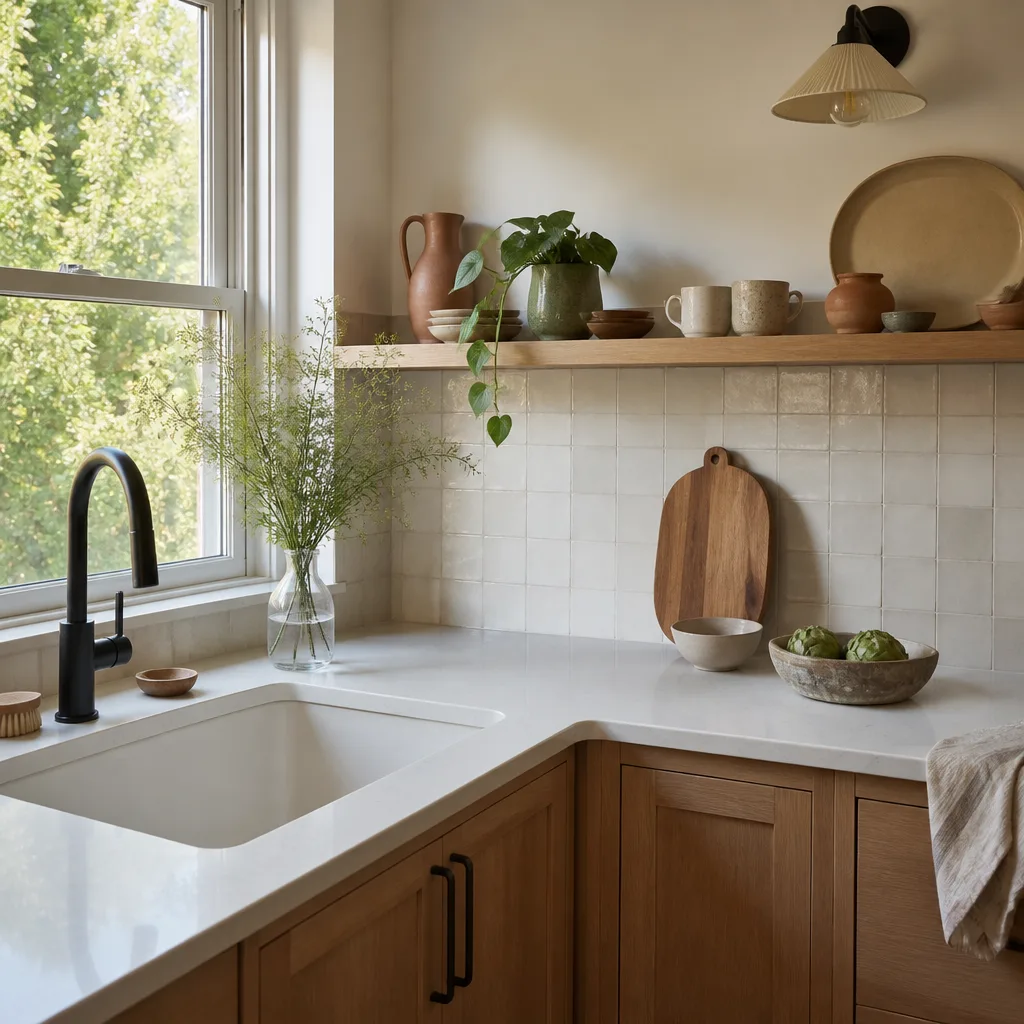
For Fort Worth Plant Prefab owners, a full kitchen remodel runs $14,000 – $45,000. Small kitchen remodels land between $9,000 – $20,000, cabinet installation between $4,000 – $13,000, and a countertop replacement between $2,000 – $6,500. The range is driven by whether we are working inside the existing module footprint or reframing the kitchen to a different layout.
Every number is a written price before any work starts, and the written price and the final invoice should read the same. That’s a standard Graham Stein has held since he started in this trade, and we don’t hand anyone a change order after the crew has arrived. The quote covers parts, labor, floor protection, waste removal, and the clean-up photo before we leave. The work carries our 365-Day Done Right Promise: if it isn’t done right, we make it right, and that’s stamped on the project, not tucked into a sales line.
DIY or Call Us?
Plant Prefab kitchens are gentler to work on than site-built remodels in one specific way: the dimensions are documented, so measuring and matching is more predictable. An owner can safely unclamp a drawer face, check the hinge cup spacing, confirm the cleat pattern, and read the module label before calling anyone. What an owner should not do is cut into walls around plumbing or electrical without understanding where Plant Prefab buried the utility runs inside the module’s chases, because a saw through a bundled chase means a bigger repair than the original part ever was.
If the job is hinge replacement or a drawer glide clip, that’s a hardware-store trip. If the job involves a delaminated cabinet box, seam-separated quartz, or any wall-attached component, call (682) 708-9180 and we’ll tell you over the phone whether it’s a service call or a remodel quote.
FAQs
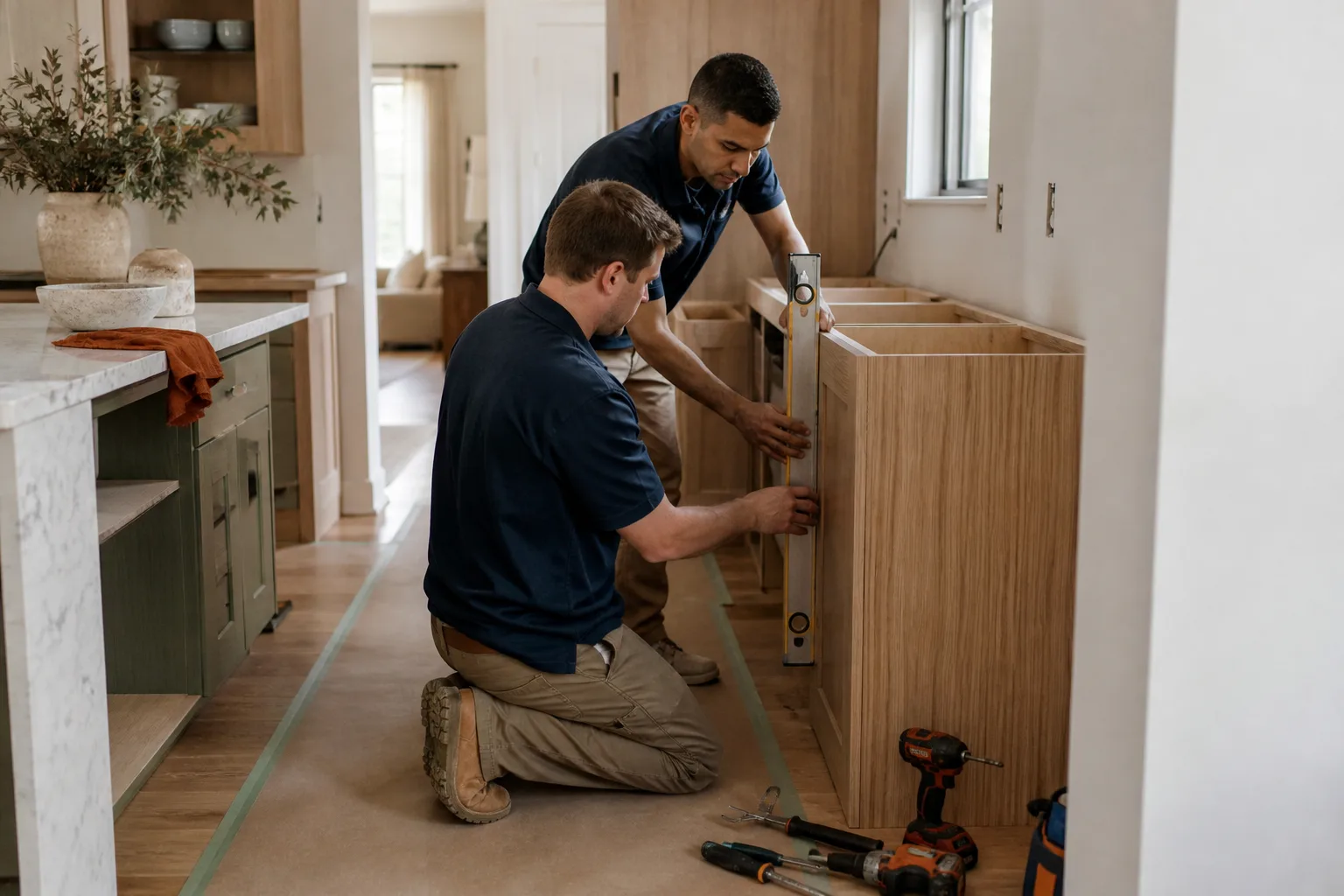
Factory-built cabinet boxes in a Fort Worth home typically live 15 – 25 years, with the sink base and any cabinet near the dishwasher failing first because of moisture and heat cycling. The doors and faces can often be refinished once, but the box itself is the limiting component.
Yes, when the failure is a face frame, hinge, drawer glide, or a single cabinet box that hasn’t compromised the run beside it. When the damage is water-related and has moved into adjacent boxes or the module wall behind them, repair stops being honest and replacement becomes the lower-risk call.
Most Plant Prefab kitchen remodels in Fort Worth run two to six weeks depending on whether we are replacing within the existing footprint or moving layout, and countertop templating adds a few days after the cabinet work is set. We schedule noisy demolition outside school-pickup hours when the family is still living in the house.
We keep common cabinet hardware, hinges, drawer glides, and backsplash trim on the truck for service calls, and we measure and order the cabinet boxes, countertops, and fixtures from our named-brand partners for remodel work. The parts arrive with manufacturer warranties you can verify independently, and we don’t substitute unknown components without putting the brand name in writing first.
If your Plant Prefab kitchen is starting to show its age, call (682) 708-9180 for a free estimate. A live person answers, we’ll talk through what you’re seeing, and we’ll schedule a walkthrough at a time that works around kids, pets, and school runs. The price you get in writing is the price on the final invoice, and the clean-up photo before we leave is part of every job, not an add-on.
Written by Graham Stein, Owner, Elmstead Remodeling Fort Worth at Elmstead Remodeling Fort Worth, serving Fort Worth and nearby areas.


