
Free written scope consultation - allowances, timeline, and change-order rules on paper before a single trade is scheduled
Quikrete Home Additions & ADU: The Fort Worth Owner’s Guide
We regularly handle home additions and ADU projects in Fort Worth where Quikrete products are specified for footings, slabs, or stem walls. A typical Quikrete-anchored home addition in Fort Worth runs $45,000 to $130,000 installed, while an ADU built on a Quikrete foundation system typically falls between $90,000 and $220,000. Most owners discover a problem not through a dramatic failure but through something quieter: a hairline crack that widens after a freeze-thaw cycle, a corner of the slab that has settled half an inch, or efflorescence blooming across the surface two winters in. Quikrete itself rarely “fails” as a material. What fails is the preparation under it, the curing conditions at the time it was poured, or the original mix being stretched beyond what it was designed to do. If you are reading this, you are probably trying to figure out whether the crack in your addition’s slab is cosmetic or structural, and whether the fix is a sealant, a new pour, or something in between. That is exactly what we will walk through.
Which Quikrete Models This Applies To
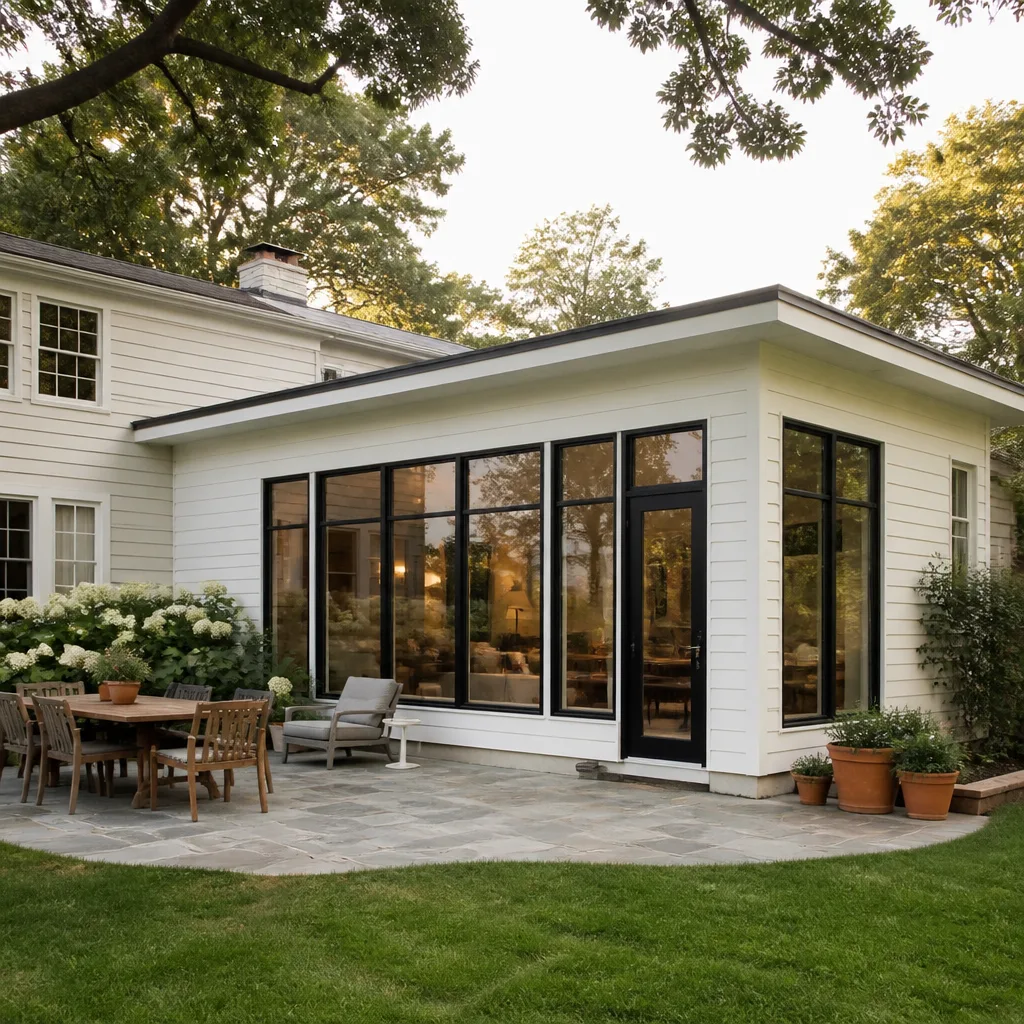
Quikrete is not a single product; it is a family of cementitious materials, and matching the right repair or replacement material to the right original pour is where most Fort Worth homeowners get tripped up. The products we most often see under home additions and ADUs across the city are Quikrete 5000 Concrete Mix (used for structural slabs and footings where higher early strength matters), Quikrete Crack-Resistant Concrete Mix (common in driveways and flatwork where fiber reinforcement reduces shrinkage cracking), and Quikrete Fast-Setting Concrete Mix (used for post bases, fence footings, and small pads). Each has a different aggregate size, a different cure rate, and a different compressive strength. The OEM-versus-aftermarket decision for Quikrete is simpler than people think: Quikrete is the OEM. A “Quikrete-compatible” material from another brand may pour fine, but if the original slab is Quikrete 5000, you want a repair material with a similar or higher compressive strength, not a basic sand mix. We prefer to patch with Quikrete product matched to the original wherever we can identify it, because the thermal expansion and cure behavior will align. When we cannot identify the original mix, we default to a high-strength repair mortar with a bonding agent and note the assumption in writing before any work begins.
One compatibility gotcha specific to our market: Texas clay soil expands and contracts dramatically with moisture. A Quikrete slab poured directly on unamended Fort Worth clay without a proper gravel base will move. The fix is not a better Quikrete mix; the fix is correcting what sits underneath. We see this most often in older additions in neighborhoods like Wedgwood and Meadowbrook, where slabs were poured decades ago on compacted native soil. The concrete is fine; the base is the problem. We will tell you that plainly, because replacing the concrete without fixing the base means you will be looking at the same crack again in three years.
Styles & brands we work with







Signs Your Quikrete Home Additions & ADU Is Failing
- Cracks wider than 1/8 inch that keep growing. Hairline cracks are normal and cosmetic. A crack that has opened past an eighth of an inch, especially one that runs corner to corner or stair-steps along a wall, usually signals differential settlement in the soil under the slab. In Fort Worth’s shrink-swell clay, this is the most common structural red flag we walk into.
- Doors and windows inside the addition that stick seasonally. When a Quikrete slab shifts, the framing above it moves too. A door that sticks in summer but closes fine in winter is often not a humidity problem; it is slab movement telegraphing up through the framing. We see this cycle repeat in Southside and near TCU homes every wet spring.
- Efflorescence, a white powdery film, that returns after cleaning. This is water migrating through the slab and depositing salts on the surface. It means moisture is moving where it should not be, whether from poor drainage at the foundation edge or a missing vapor barrier under the pour. Wiping it off without addressing the water source is a temporary fix.
- A hollow sound when you tap the surface. Delamination, where the top layer of a slab separates from the body, sounds like a dull drum. It usually starts with a bad curing day (too hot, too fast) or overworking the surface before the bleed water cleared. Fort Worth’s August heat is a frequent culprit on slabs poured without proper wet curing or a curing compound.
- Water pooling against the slab edge after rain. This is less about the Quikrete and more about the grading around it. When gutters empty against a foundation or the ground slopes toward the addition, water saturates the clay and amplifies movement. In older Fort Worth neighborhoods with mature trees, root-driven soil desiccation makes this worse in droughts.
Replacement Cost & What’s Included
For Fort Worth specifically, a Quikrete-anchored home addition runs $45,000 to $130,000. An ADU built on a Quikrete foundation typically lands between $90,000 and $220,000. On the repair side, where most of our calls start, smaller corrections are far less: a partial slab lift and re-secure might run a few thousand dollars, a sectioned replace-and-repour of a cracked corner could fall in the $3,000 to $8,000 range depending on square footage and access, and a full footer replacement under an existing addition is a bigger job that we scope and price after seeing the conditions. What drives the range is soil condition, square footage, whether we are matching existing floor height, and whether the work requires engineered drawings for a city permit in Fort Worth. Every quote includes the written price before we start, the specific Quikrete or matched product by name, the labor, the haul-away, and the cleanup. We do not do change orders on the concrete portion of a job once the price is written. If the scope changes because we found something hidden, we stop and explain it before the next step, in writing.
See the difference
 Before
 After
After Before
 After
After Before
 After
AfterDIY or Call Us?
For a homeowner, there are a few things worth doing, and a longer list of things that are not. You can safely monitor a hairline crack yourself: mark both ends with a pencil line and date it, then check monthly to see if it grows. You can check your grading with a four-foot level after a rain. What you should not do is attempt to lift, re-pour, or structurally patch a slab that is actively moving. Concrete is heavy, the chemistry has a narrow working time in Texas heat, and an improperly bonded patch will spall off and create a worse surface than you started with. Cutting into an existing slab without knowing where the rebar, post-tension cables, or utilities run is genuinely dangerous. This is not a gate repair. If the crack is moving, if doors are binding, if water is pooling against the foundation, call us at (682) 708-9180. We will look at it, tell you what is actually happening, and write down what we recommend and what it costs before any tools come off the truck.
FAQs
A properly prepared, properly cured Quikrete slab under a home addition should last 30 to 50 years before structural replacement is even a conversation. The wildcard in Fort Worth is the soil underneath: clay that heaves and shrinks can shorten the useful life of the slab-base relationship significantly, even while the concrete itself remains sound. A cracked slab is usually a soil story, not a material story.
Yes, in many cases. Hairline cracks can be sealed with a Quikrete-matched sealant. Moderate cracks can be chased and filled with a structural epoxy or a polymer-modified repair mortar. Full replacement is only called for when the slab has separated vertically, when there is widespread delamination, or when the soil under it has failed so badly that lifting and stabilizing is no longer viable. We will always tell you which category you are in before we recommend a course of action. Call (682) 708-9180 for an exact quote on your specific damage, and the estimate is free.
A localized crack repair is usually a same-day job once materials have had time to set. A partial sectional replacement in an addition typically runs two to four days, including demolition, base correction, pour, and a minimum curing window before the area takes foot traffic. A full ADU foundation pour is generally a one-to-two week sequence depending on forms, inspection, pour day, and cure time before framing.
Our crews carry a standard compliment of Quikrete repair products: crack sealant, fast-setting mix for post and anchor work, and a high-strength repair mortar with bonding agent. For full pours, we order the specific Quikrete product matched to the spec, scheduled for the pour date so it is fresh, not sitting in a warehouse for months. We also work with KraftMaid and Cambria on interior finish packages for additions, and have Silestone specified on several of our ADU builds, so the materials throughout the project carry manufacturer warranties you can verify directly.
Call Elmstead Remodeling Fort Worth for a Free, Written Estimate
If you have a Quikrete product under your Fort Worth home addition or ADU and something does not look right, call (682) 708-9180. A live person answers, day or night. We will schedule a walkthrough, look at the slab, the soil, the grading, and the framing above it, and we will hand you a written scope and price before any work starts. Graham Stein grew up in Los Angeles and learned the trade at Los Angeles Trade-Technical College before spending decades doing construction work across North Texas. He still writes every scope of work down before a single tool comes off the truck. As Graham puts it, “The written price and the final invoice should read the same – if they don’t, that’s on us to explain before we hand you a pen.” We hold to that on every Quikrete repair, every addition, and every ADU we build. Shoe covers at the door, drop cloths on the floors, and a photo of the cleanup before the crew leaves.
Written by Graham Stein, Owner, Elmstead Remodeling Fort Worth at Elmstead Remodeling Fort Worth, serving Fort Worth and nearby areas.


