

Free written scope consultation - allowances, timeline, and change-order rules on paper before a single trade is scheduled
Quikrete Kitchen Remodeling: The Fort Worth Owner’s Guide
If you’ve started a kitchen remodel with Quikrete products and hit a point where a countertop bed, leveling pour, or resurfacing layer didn’t set the way it should have, here’s the short version: we install and correct Quikrete-based kitchen work throughout Fort Worth, with full kitchen remodels typically running $14,000 to $45,000 depending on scope. We keep common Quikrete repair products on our trucks, and we can assess a failed pour or cracked surface the same day you call. Most homeowners notice the problem before they ever pour the next layer: a hairline crack that runs a little too deep, a patch that sounds hollow under the knuckle, or a corner that never fully cured after the labels said it should.
Quikrete makes solid, dependable products for tile beds, countertop forms, and floor leveling. But the way Fort Worth clay soil shifts and the way our summers pull moisture out of wet concrete means a pour that works in a mild climate can misbehave here if the prep wasn’t right. That’s what this page is for: helping you figure out what went wrong, what it costs to fix, and whether it’s a weekend correction or a job for a crew that does this every week.
Key Takeaways:
- Quikrete kitchen work in Fort Worth typically costs $14,000 – $45,000 for a full remodel; smaller corrections like re-leveling a countertop base or repairing a failed patch run less.
- The mix, the moisture level at pour time, and contact with dry Texas air are the three factors that decide whether a Quikrete pour sets correctly.
- We are an independent Fort Worth remodeling contractor; we install and correct work involving Quikrete products but are not affiliated with Quikrete.
- Written price before any work starts, every time. You’ll know the number before a single tool comes off the truck.
Which Quikrete Models This Applies To
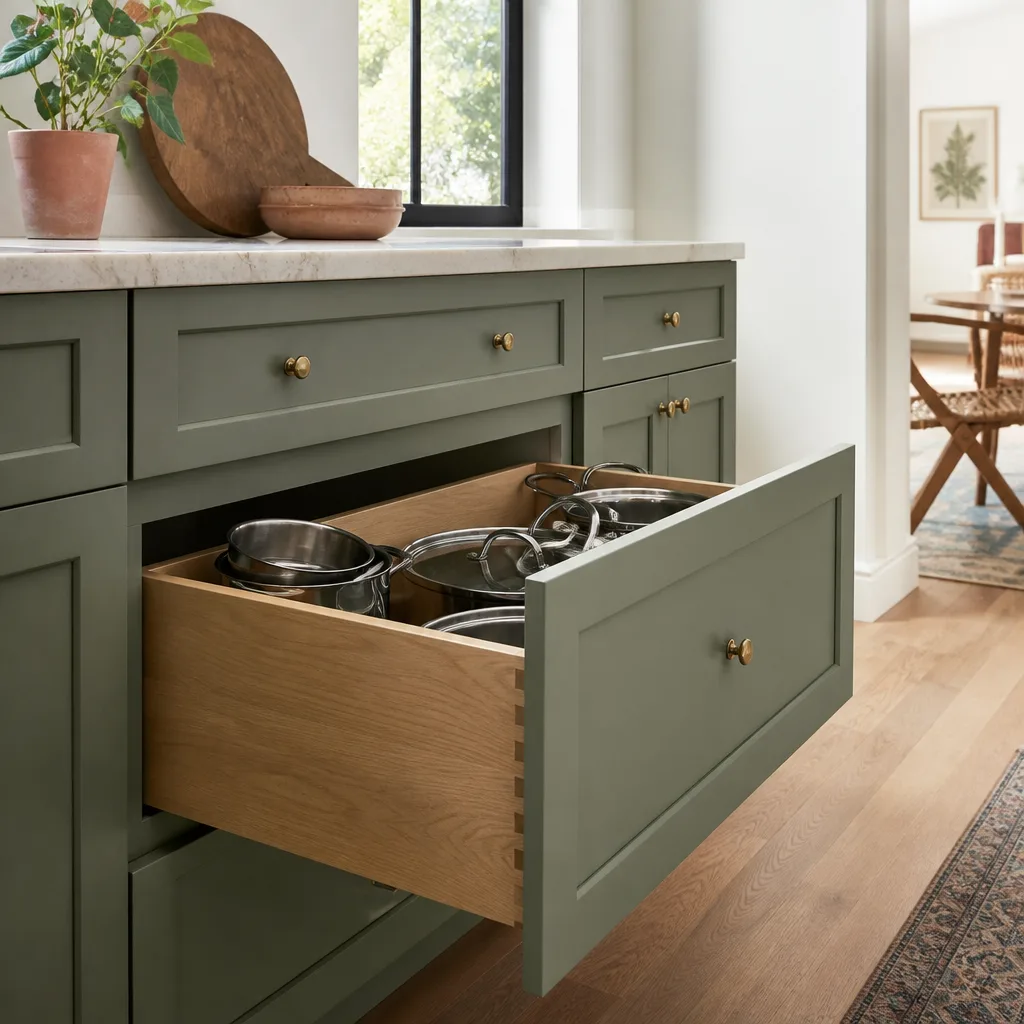
Quikrete’s kitchen-relevant line breaks down into a few families, and the fix path changes depending on which one you used. The most common in Fort Worth kitchens are the Sand/Topping Mix (used under tile and as a leveling bed), the Countertop Mix (formulated with smaller aggregate for smoother finished surfaces), the Floor Resurfacer (for leveling dips before new flooring), and the FastSet varieties (for patches and small repair areas). Each has a different working time and a different tolerance for heat and dryness.
The first compatibility check is the bag code. Quikrete prints a batch number and production date on the back or the bottom gusset; if the mix sat in a Fort Worth garage through a humid spring and a 100-degree August, the bag date matters before you blame the product. The second check is the water ratio listed on that specific bag: Countertop Mix wants a noticeably stiffer, lower-slump mix than Sand/Topping Mix, and guessing at the water is how most kitchen pours go wrong before they ever dry. For OEM versus aftermarket, Quikrete’s own blends are consistent enough that we always use the genuine product for countertop work; for a simple leveling bed under tile, a quality aftermarket sand mix can perform fine, but we’d rather show you the difference in writing than claim they’re interchangeable when they aren’t.
A compatibility gotcha worth knowing: Quikrete Countertop Mix is designed for pours between roughly 1.5 and 2 inches thick. If the form or the existing cabinet deck demands a thinner edge profile than that, the mix will get crumbly at the corners no matter how carefully it’s floated. In Fort Worth kitchens where we’re matching an existing countertop edge, we’ve had to build up the deck first or switch to a different product entirely. That’s one of those details that shows up on a walkthrough, not on a bag label.
Styles & brands we work with







Signs Your Quikrete Kitchen Remodeling Is Failing
- Hairline cracks that keep widening. This usually means the mix dried too fast in Fort Worth’s low-humidity heat, or the substrate flexed after the pour. If the crack grows over a week, the bond underneath has started to release.
- A hollow or drumming sound when you tap the surface. That’s delamination: the top layer has separated from the base. It happens most often when a resurfacer was poured over a dusty or sealed floor that wasn’t mechanically roughed first.
- Chalky dust that keeps coming back after cleaning. The surface is spalling, which in Texas usually traces to a pour that dried too quickly and never achieved full surface hardness. A sealer can slow it, but it won’t restore missing strength.
- Corners or edges that crumble when you run a thumb along them. Thin-edge failure, almost always tied to pouring below the product’s minimum thickness or stripping the form too soon. This is the failure we see most often on Quikrete countertops.
- Level dips you can feel through new flooring. If the resurfacer didn’t fully flatten the slab, you’ll feel it through tile or plank within weeks. The repair is local, but it has to be ground or built back to zero before the finish floor goes down.
See the difference
 Before
 After
After Before
 After
After Before
 After
AfterReplacement Cost & What’s Included
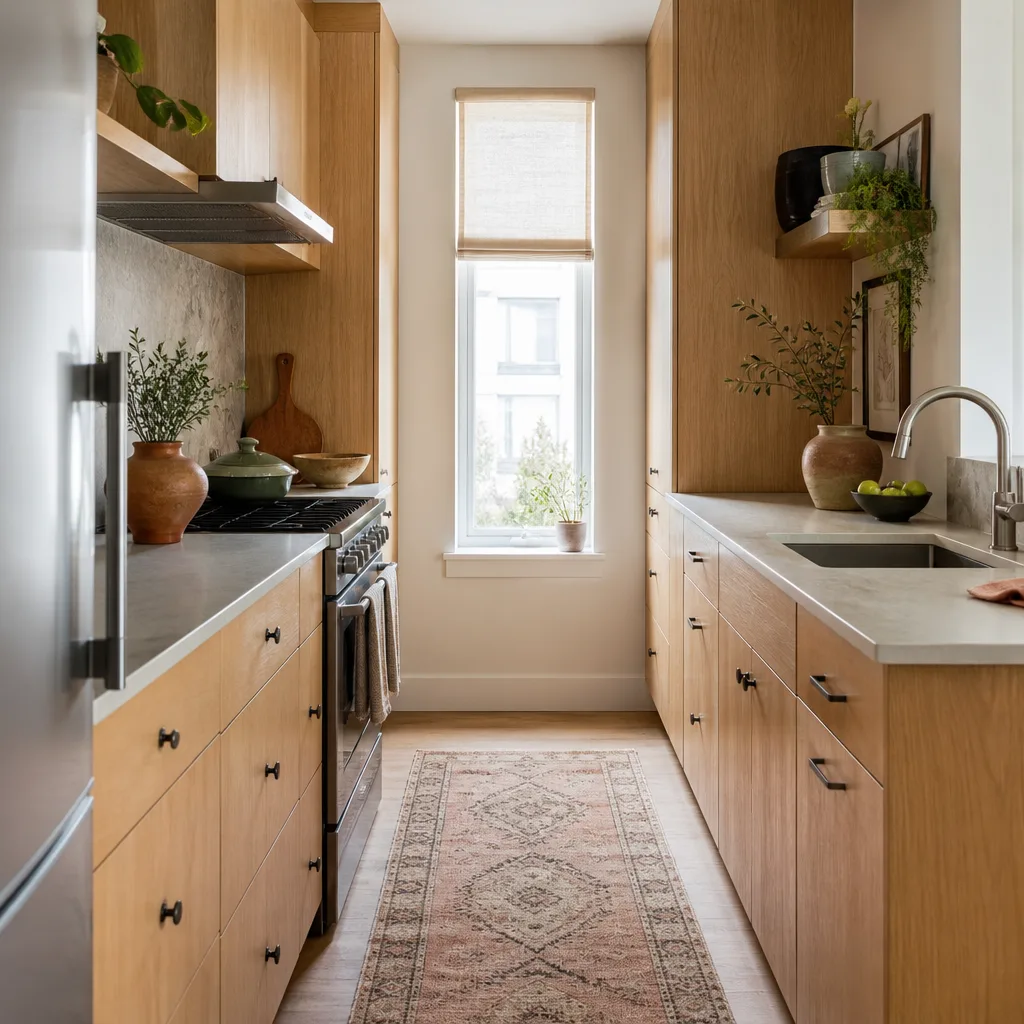
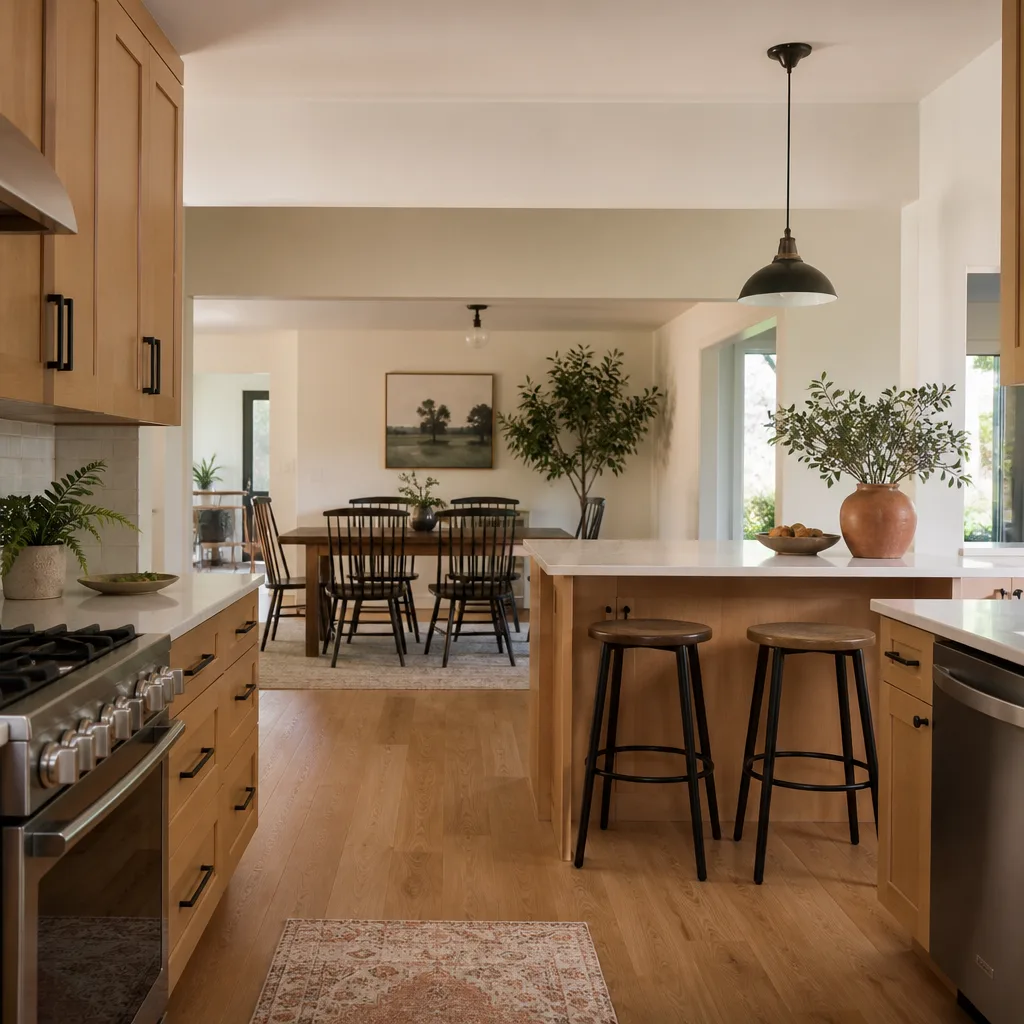
Because Quikrete work inside a kitchen is rarely a standalone item, the honest way to price it is by the scope it sits inside. A full Quikrete-based kitchen remodel in Fort Worth typically lands between $14,000 and $45,000. That range includes the concrete or leveling work, but also the cabinets, countertop finishing, plumbing connections, tile, fixtures, and clean-up that a real kitchen job requires. We never quote the countertop without quoting what it sits on.
Line-item ranges to plan around:
- Kitchen remodel (full scope): $14,000 – $45,000
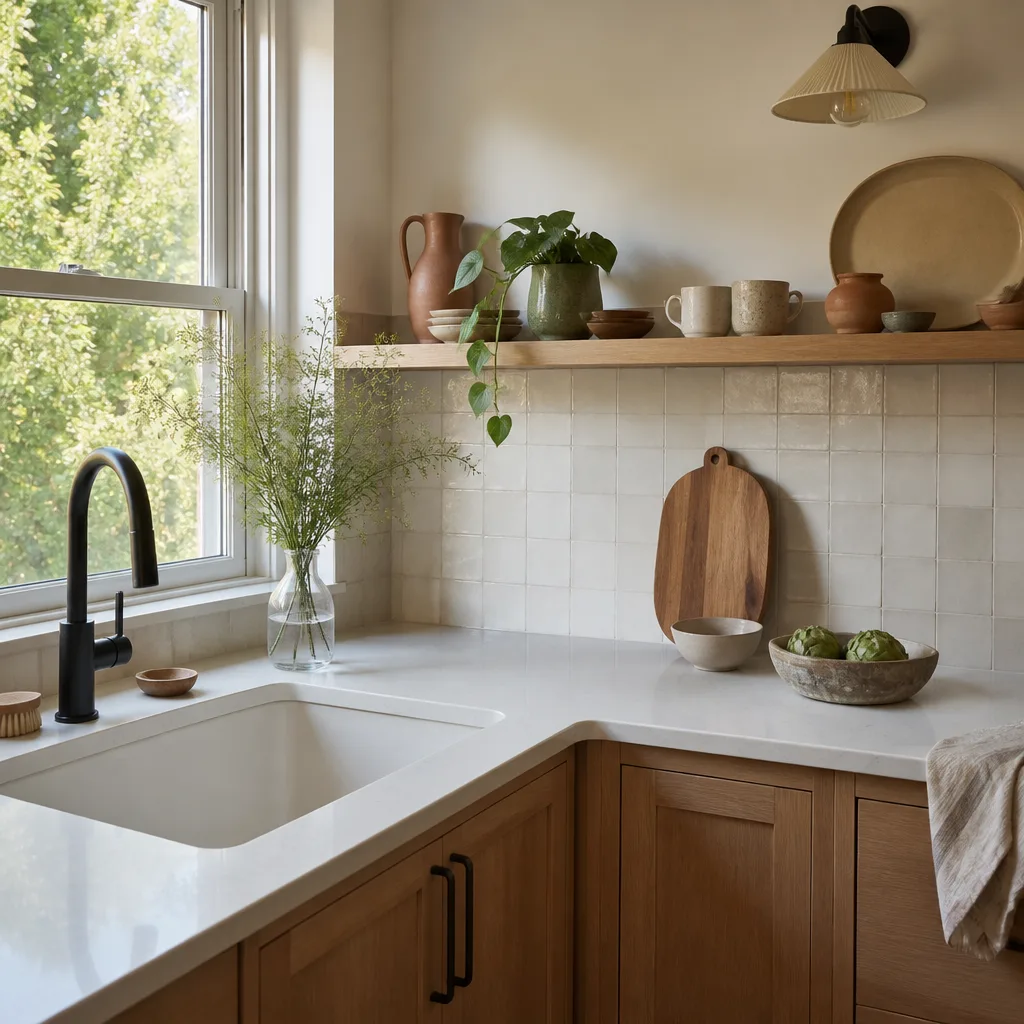
- Countertop installation (including Quikrete base and form work): $2,000 – $6,500
- Floor leveling with Quikrete resurfacer (per kitchen area): included in remodel scope; standalone spot repairs quoted in writing after the walkthrough
- Failed-pour correction (grind, re-pour, refinish): priced per square foot and included in the written estimate before any work starts
Every Quikrete kitchen job we touch in Fort Worth includes drop cloths on the floors, shoe covers at the door, quiet tools during children’s sleep hours where the building allows a choice, and a photo of the clean-up before the crew leaves. The written price is the written price. The 365-Day Done Right Promise covers the work when it’s finished: if it’s not done right, we make it right.
One thing Graham Stein has learned over years of concrete work in North Texas: a Quikrete failure is rarely the product’s fault. It’s almost always the water ratio, the prep, or the weather on pour day. That’s why we write the mix plan down before we pour, and why we check the humidity and substrate temperature before the first bag opens. The written price and the final invoice should read the same, if they don’t, that’s on us to explain before we hand you a pen.
DIY or Call Us?
What you can safely check yourself: the bag date, the color of the hardened surface (uneven gray patches usually mean uneven drying), and whether a crack is active by measuring it with a pencil mark and checking again in a week. Those observations help us price the repair faster, and they cost you nothing.
Where DIY goes wrong: grinding and re-pouring a countertop base involves moving hundreds of pounds of material across a finished kitchen floor, and a fast-setting mix that kicks off 20 minutes sooner than expected on a hot Fort Worth afternoon can leave you with a pile you can’t tool and can’t reuse. Leveling a floor under cabinets is a two-person minimum job with laser equipment. None of this is worth learning through a failed pour in your own kitchen. Call (682) 708-9180 and we’ll get you a written price before any work starts.
FAQs
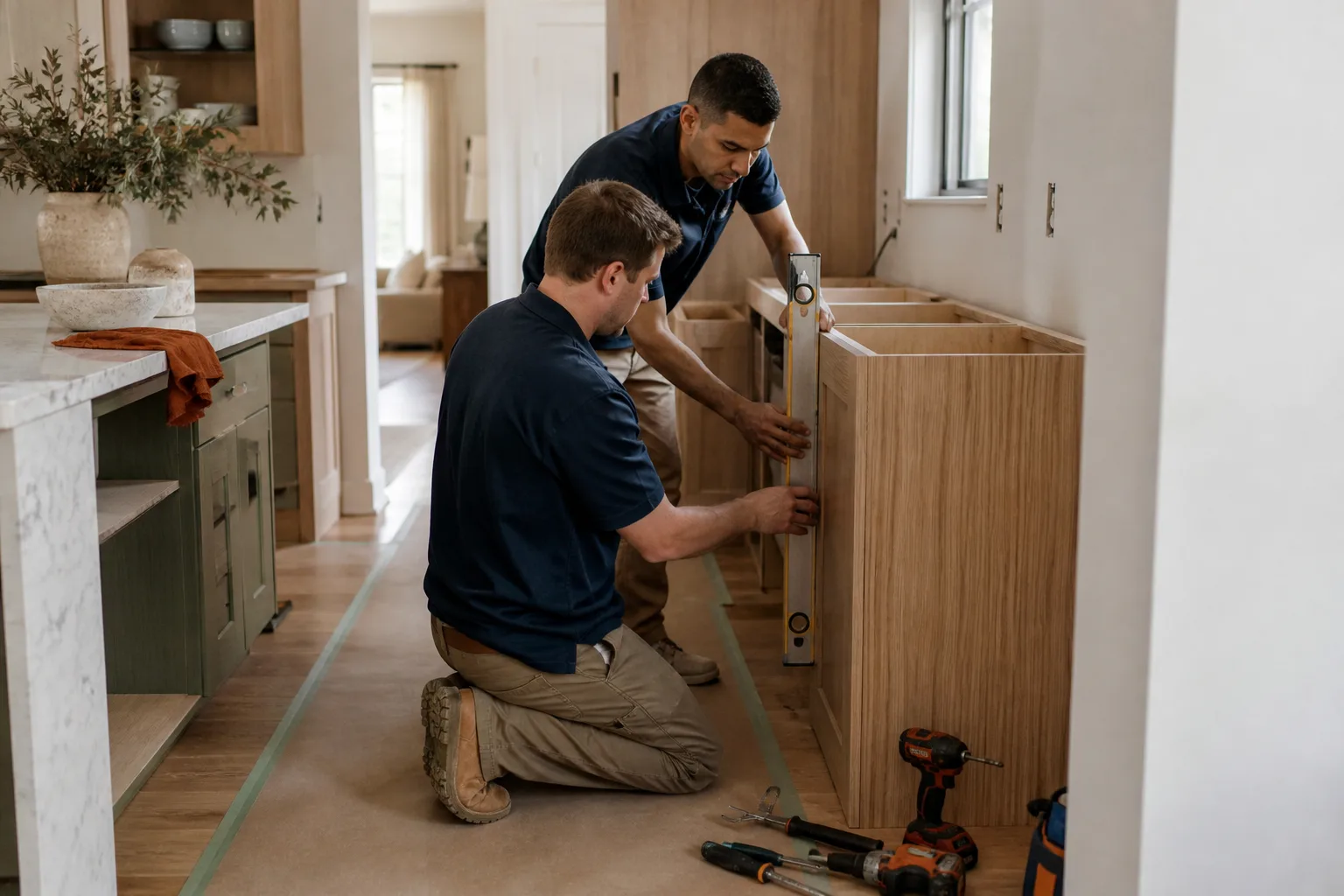
A properly poured and sealed Quikrete surface in a Fort Worth kitchen should last 15 to 25 years before it needs resurfacing or refinishing. The biggest lifetime threats in our area are rapid drying during summer pours and slab movement from clay soil, which can crack any rigid concrete surface regardless of brand. Call (682) 708-9180 for an exact assessment of your existing surface.
It depends on the failure type. A partial delamination or thin-edge crumble can sometimes be ground back and repaired; a structural crack that runs through the full depth or a surface that never achieved hardness usually needs to be removed and re-poured. We will not tell you a patch will hold if it will not, because the 365-Day Done Right Promise means we would be fixing it again on our own time. Call (682) 708-9180 for a free estimate and an honest answer.
A focused repair like re-leveling a small floor area or correcting a countertop edge can take one to two days. A full Quikrete-based kitchen remodel in Fort Worth typically runs three to six weeks, with concrete work happening early in that schedule and cure time built into the calendar. We’ll give you a written schedule with the written price, and we call before we change it.
We keep Sand/Topping Mix, Countertop Mix, and a fast-setting repair product on our trucks for most Fort Worth jobs, and we can source specific Quikrete products from local suppliers the same day if the job needs a particular formula. We also work regularly with KraftMaid, Cambria, and Silestone for cabinets and finished stone surfaces when the project calls for it.
If the Quikrete work in your kitchen didn’t set right or you’re planning a remodel and want the concrete, cabinets, countertops, and fixtures handled by one crew that answers the phone, call (682) 708-9180. We’ll schedule a walkthrough, write the scope down, and hand you a price before any work starts. No voicemail, no bot, no surprise line items at the end.
Written by Graham Stein, Owner, Elmstead Remodeling Fort Worth at Elmstead Remodeling Fort Worth, serving Fort Worth and nearby areas.


